Do you design a lot of characters living in not-modern eras and you’re tired of combing through google for the perfect outfit references? Well I got good news for you kiddo, this website has you covered! Originally @modmad made a post about it, but her link stopped working and I managed to fix it, so here’s a new post. Basically, this is a costume rental website for plays and stage shows and what not, they have outfits for several different decades from medieval to the 1980s. LOOK AT THIS SELECTION:
OPEN ANY CATEGORY AND OH LORDY–
There’s a lot of really specific stuff in here, I design a lot of 1930s characters for my ask blog and with more chapters on the way for the game it belongs to I’m gonna be designing more, and this website is going to be an invaluable reference. I hope this can be useful to my other fellow artists as well! 🙂
[This was part of a larger national survey of several thousand families, and the Dept of Home Ec was at the time part of the Department of Agriculture. So far as I can tell, the Dept asked families to keep a very detailed diary of expenses for two weeks, and then did a couple of intensive follow-up interviews in person. Most of the families in this set were nuclear married couple families, so there is some limitations for applying this to two men living together or alone.]
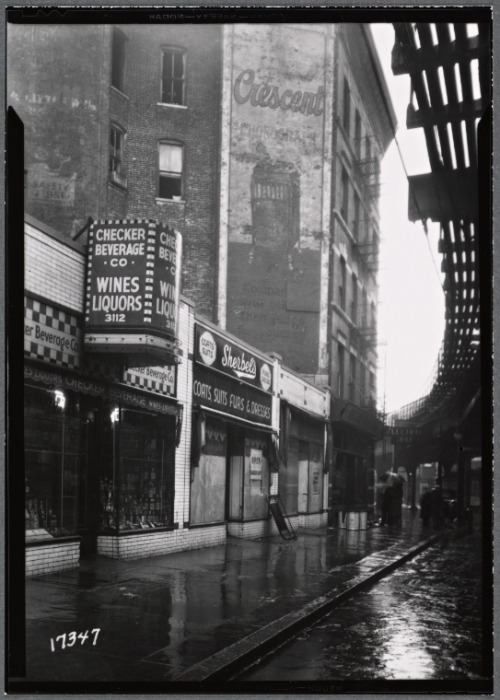
First, some basic numbers: I’ve done a couple posts already about income/rent/occupation/birthplace/etc in different Brooklyn neighborhoods, and if you want to play around with any of that data, you can see it here. But the tldr is the most likely occupation for a young working class man in 1930s Brooklyn would be, in order: file clerk/bookkeeping office work; unskilled factory work; and retail sales, making 50-70 dollars a month with rent about $25-30 a month. (You can see and play with the housing data here).
Obviously how an individual household distributed its expenses differed depending on what the household looked like, unemployment, if they were giving money to family, etc etc, but for 1935-1940, the Dept of Home Economics estimated the average distribution of expenses for working-class families in Brooklyn and NYC:
The Dept of Home Economics said that for a family of 4, a working class monthly income of $125 a month was "not so liberal as that for a ‘health and decency’ level which the skilled worker may hope to obtain, but it affords more than ‘minimum of subsistence’ living.“ My interpretation of this from working with other Dept of Home Ec records of the period is that this is slightly above what we would call poverty-level now, and more like lower middle class or working poor. Not so much that there’s much room for savings or for emergencies, but enough to make ends meet. The Dept of Home Ec said that their working-class minimum included: “The housing allowed is a 4- or 5-room house or apartment in a fair state of repair, with an indoor bath and toilet for the family’s exclusive use. The budget includes maintenance for an inexpensive radio, a daily newspaper, and attendance at the movies once a week. It does not provide an automobile. No provision is made for saving other than life-insurance premiums.” A family of 4 on $125 would be just getting by; 2 people living together would have been doing pretty ok if both were working full time and had no periods of unemployment or expensive emergencies. The Dept of Home Ec said that a monthly income of $210/month for a family of 4 would be a much more comfortable rate which would allow for some savings, leisure travel, a car, nice consumer goods and school tuition.
I have the numbers for distribution of food expenses, but I haven’t run them yet (I can if anyone is super interested). Food prices in Brooklyn in 1940:
Beef starting at 25 cents/lb for a roast and going up from there
Bacon 30 cents/lb
Cheapest meat available: salt port at 17 cents/lb or fresh fish at 16 cents/lb
Milk delivered quarts by the milkman: 13 cents a quart, or 52 cents for a gallon jug
Eggs 35 cents/lb
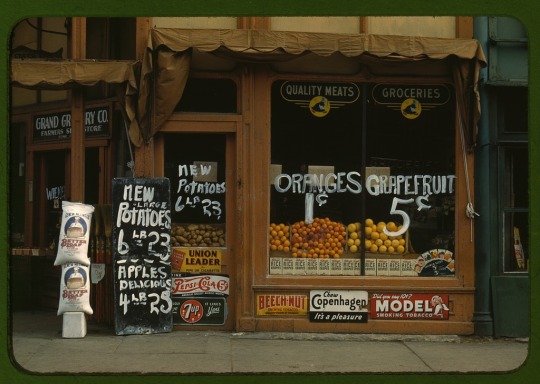
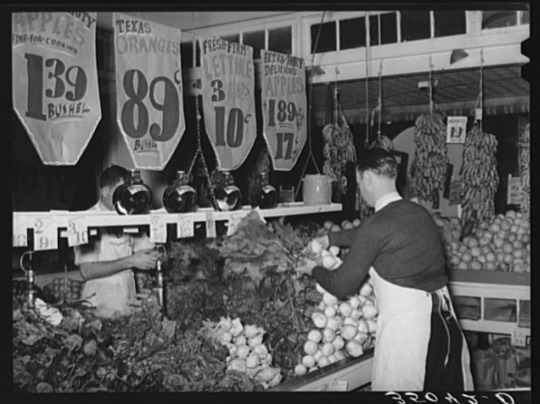
Fresh fruits and vegetables including potatoes: 2-7 cents/lb, with the exception of oranges at 27 cents/lb. Bananas were pretty affordable at 7 cents/lb.
Canned fruit and veg: slightly more expensive at 10-20 cents/can
Coffee: 20 cents/lb
If you want to see what how these numbers compare to 2015 dollars, the Beareau of Labor Statistics has a calculator here, but my check of the comparisons is that most prices seem to be roughly as expensive as they are in 2015 terms, with the exception of milk having been much more expensive at an adjusted 2015 $8/gallon and coffee having been much less expensive at an adjusted 2015 $3.50. (Milk is $4 and coffee is $8-12 in my area).
Other kinds of expenses:
Funerals: For families who buried someone in the past year, the average cost for the funeral was $70, which seems quite low to me considering the average monthly rent was around $35 or so. Meaning that a funeral was about two month’s rent, which my gut says is too low, but that’s all I have data for. At least according to the MCU phase one bonus materials, Steve’s mother died when he was 18 in 1936, putting her right in this average. Though the funeral costs ranged from 30-140 dollars, so again, unclear what the actual cost of the funeral would have been.
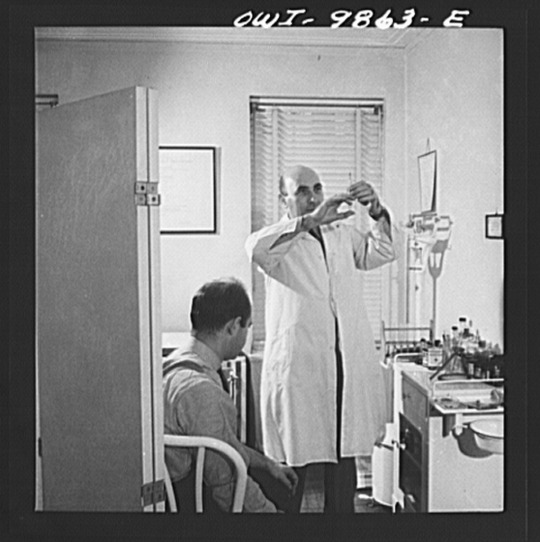
Medical care: Most working class families in the set saw the doctor 1-2 times a year, about equally likely to see the doctor in a clinic, office, or home visit, with a cost of about a dollar a visit. The Dept of Labor’s cost-of-living calculator says that’s about $17 in 2015 money, but relatively speaking I think it would have been the equivalent of closer to $50—it’s about ten beers worth, or a little on the high side of a copay for people who have insurance now. So kind of a big expense, especially if you’re seeing the doctor a lot. Most families spent around fifty cents to a dollar a month on medicines, including non prescription things like aspirin and cough syrup as well as prescriptions.
Public transportation and cars: only about 20% of families owned a car, and for those that did, Chevys, Fords and Pontiacs were the most popular across all occupation groups. Families that did own a car spent about 20 cents per person per week on public transportation including buses, streetcars, and subway lines, and families without cars spent about 30 cents per person per week. Unskilled and lower wage workers (docks, laborers, factory work) spent more on average on public transportation, probably because they lived farther from their jobs. @hansbekhart has a great post on the subway/streetcar system and costs.
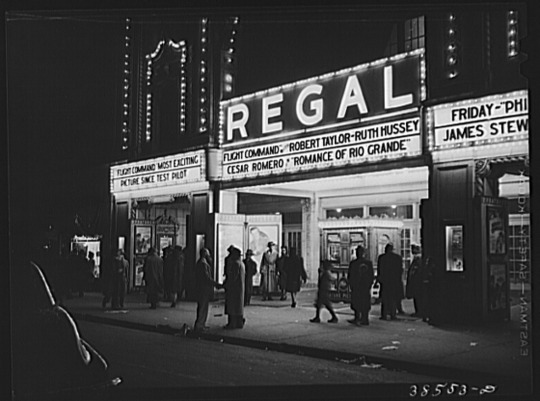
Entertainment: The average working class man in this set spent $3 a year on baseball games (and other sports, but lbr it’s probably mostly baseball). I haven’t been able to find out how much tickets in the cheap seats cost, but if it’s anything like a movie ticket (25 cents), that’s 12 games a year. Likewise, the average working class man saw a lot of movies–12-20 movies per year! Children saw more! That’s more than one movie a month, at a cost of 25 cents a movie.
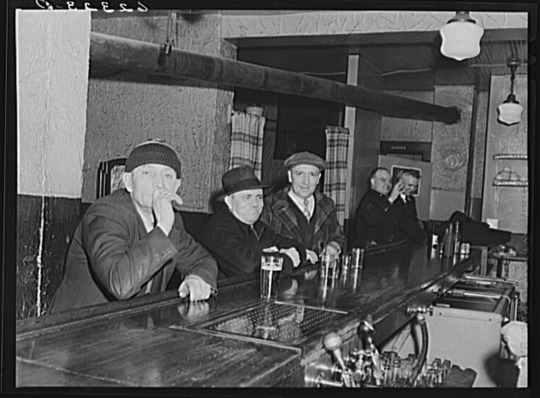
Other fun things: The average working class man in this set bought 2-5 packs of cigarettes a week. That seems like a lot to me! But I don’t smoke. Almost all men in this set reported buying at least one pack of cigarettes a week (with the exception of life insurance agents!). Likewise, almost all men reported having at least one beer a week, with the average being 3-5 beers a week at home and 2-3 beers a week outside the home, at a cost of ten cents a pint/bottle for both.
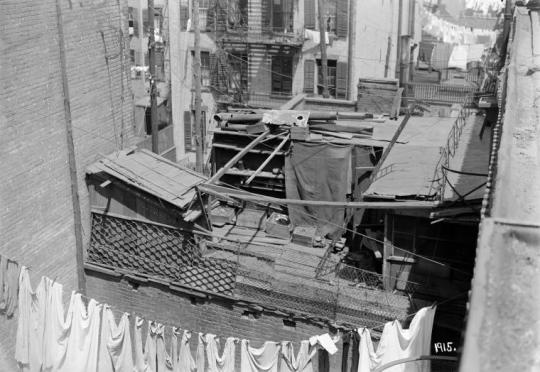
Clothes: Working class families spent around 10% of their income on clothing and related expenses, but there’s a lot of variety in this depending on how many people were in the family, so it’s hard to say how much exactly Steve and/or Bucky would have spent. My best guess based on the data: A single man, making around 50-70 dollars a month, would have put about 2-5 dollars of that towards clothes, haircuts, things like that. A man’s suit cost in the 10-40 dollar range, and the Dept of Home Ec said that about 50% of the working class men in their sample bought suits in the $17-27 range (a suit including pants, coat and vest), preferring suits in the $22-27 range. So for someone paying $30 in rent, a suit would be a pretty big deal, but in making the choice they would tend to prefer the more expensive option in their price range. Working class families also spent around a quarter a week on laundry expenses, mostly on putting laundry out to wash instead of doing it themselves. So a family would send their laundry out to a laundress who would wash it by hand, and then get back the wet laundry to hang dry themselves.
This is the stuff I was interested in, but the dataset is really big and pretty fine-detailed, so if there’s something else you want to know about, let me know!
I want to do something like this in future (I have a working document on grocery prices in my Google Docs.) but it a big project. In the mean time, this post is amazing and goes into things I probably won’t anytime soon!
the reason that this line is significant is because jim morita was a japanese-american soldier. while it’s never explicitly stated, here’s what morita’s life would have been like before being captured by HYDRA:
december 7, 1942: the empire of japan attacked pearl harbor. he was probably a soldier at this time since he was considered to be elite enough for steve’s squad; unknown where he served, although there were many japanese-american soldiers who died in and who were the first responders to the attack.
december 8, 1942: the us declares a state of war with japan.
all japanese-american men disqualified from the draft via the label “4-C,” or “enemy alien,” no matter their citizenry. all japanese-american men in the service are removed from duty.
february 19, 1942: president roosevelt signed executive order 9066, authorizing the military to exclude certain groups from military zones.
the fbi searched the homes of japanese-americans for “contraband,” including correspondence with anyone in japan such as personal letters. any such contraband is confiscated.
(fun sidenote: how did they know where to find these people so that they could be harassed? well, gosh, the census bureau told them. illegally. no big deal.)
community leaders, including priests, gathered up and sent to prison camps like tule lake. this is also where several families were sent to be deported to japan since they were not deemed loyal enough.
122,000 people of japanese-american descent are told to sell or store their property as they can only bring what they can carry out of the “exclusion zones,” which meant most of the west coast. (hawaii, whose population was about a quarter japanese, was for the most part not included in this.) given only a few weeks to organize their lives, they were then sent via cattle train to concentration camps set up throughout the us.
since morita was from fresno, he would have ended up here:
sunny poston, arizona. conveniently built on an indian reservation against the wishes of the tribal council, who wanted nothing to do with the government’s white supremacist bullshit. why only infringe on the rights and wishes of one minority group, right?
choice quote: ”After fifteen months at Arizona’s vast Poston Relocation Center as a social analyst, Commander Leighton concluded that many an American simply fails to remember that U.S. Japanese are human beings.”
shortly after arriving, all prisoners were asked to fill out a survey. most of the questions would be simple, like their name, city of birth, etc, but questions 27 and 28 were different.
question 27: Are you willing to serve in the armed forces of the United States on combat duty, wherever ordered?
question 28: Will you swear unqualified allegiance to the United States of America and faithfully defend the United States from any and all attacks by foreign and domestic forces, and forswear any form of allegiance or disobedience to the Japanese Emperor, or any other foreign government, power, or organization?
did you answer yes to both? congratulations! you’re a soldier. did you answer no to both? perhaps you’re too old or sick to serve? perhaps the general fuckery of this entire situation got you down? perhaps you were born outside of the us, so you can’t disavow your country of origin since there is a very real chance you’ll be deported? haha well congratulations hope you like prison and/or deportation
so all of this goes on
and then morita goes on to serve
and get captured
and rescued
and dumbass doogan says, “what, are we taking everybody?”
When architecture student Victor Lundy
was drafted during WWII, his attention
remained focused on his sketches, which
became a visual diary of his everyday
army life. Lundy donated all 8 of his
sketchbooks to the Library of Congress
in 2009, and they’re now available
online for everyone to see. Source




 vvinterdumpling.home.blog